Friday, 30 June 2023

Emerging Trends In The Ride Sharing Mobile App Industry


The ride sharing mobile app industry has witnessed significant growth in recent years, and this trend is expected to hold its course.

This growth is driven by the convenience and affordability that ride-sharing services offer in comparison to traditional taxi services.

According to a recent report by MarketWatch, the global ride-sharing market size was valued at USD 64,144.69 million in 2021 and is expected to expand at a compound annual growth rate (CAGR) of 13.65% during the forecast period, reaching USD 138,230.11 million by 2027. This indicates the ride-sharing industry will continue to grow in the coming years.

Introduction: Emerging Trends In The Ride Sharing Mobile App Industry

Additionally, there is a growing trend towards shared mobility, which includes not just ride-sharing, but also car-sharing and peer-to-peer car rentals. McKinsey reports that the shared-mobility market, which includes e-hailing, accounted for the largest share of global consumer spending in 2019, at $120 billion to $130 billion.

In this article, we will discuss some emerging trends in the ride sharing mobile app industry.

Personalised User Experience

Ride sharing companies are focusing on providing a more personalised user experience to their customers. This includes features such as enhanced navigation and routing, multiple payment options, and integration with other apps.

  • Enhanced Navigation and Routing

Enhanced navigation and routing features can help riders save time and get to their destinations quicker by providing the drivers with real-time traffic updates and alternative route options.

This can be particularly helpful in areas where the traffic is substantial or when unexpected road closures and accidents occur.

  • Multiple Payment Options

Offering multiple payment options can also enhance the user experience by giving riders more flexibility and convenience. For example, riders may prefer to use a specific payment method or may want to split the fare with other riders in their group.
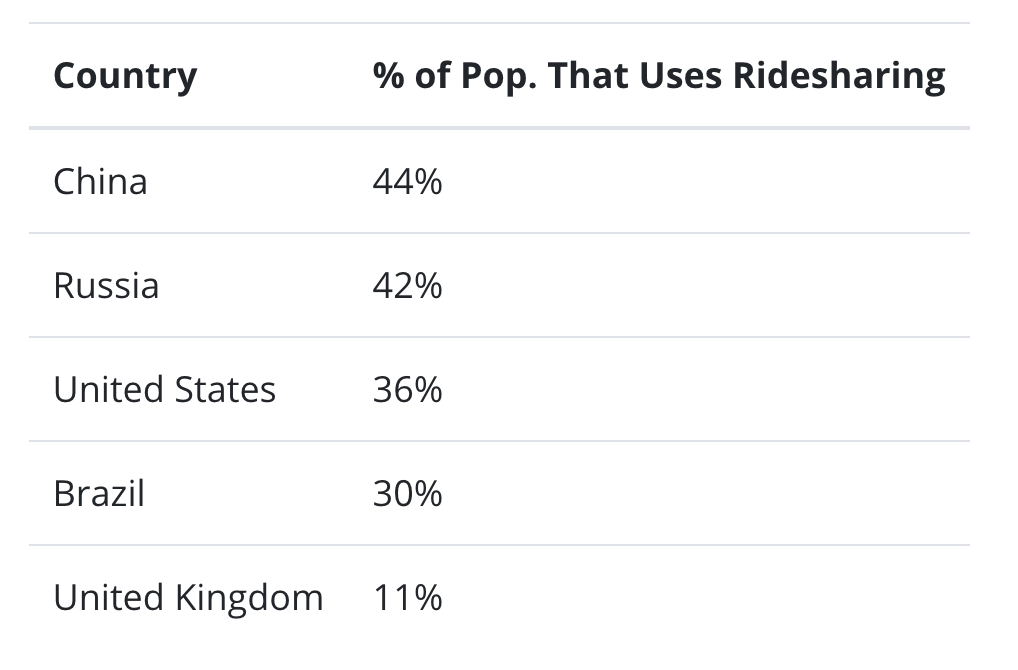
Trends In the ride sharing mobile app industry

Having multiple payment options can make the process of paying for rides more seamless and hassle-free.

  • Integration with Other Apps

Integration with other apps can also be beneficial for riders as it could provide them with a more comprehensive user experience. For example, integrating with a music streaming app can allow riders to listen to their favourite songs during a ride.

Or ride sharing companies can integrate their platform with food delivery apps that allow riders to order food that can be delivered at the destination or to a location of their preference.

Electric and Hybrid Vehicles

With increasing concerns over climate change, ride sharing companies are shifting towards electric and hybrid vehicles. This trend is mainly driven by government regulations and incentives that encourage the adoption of sustainable transportation options.

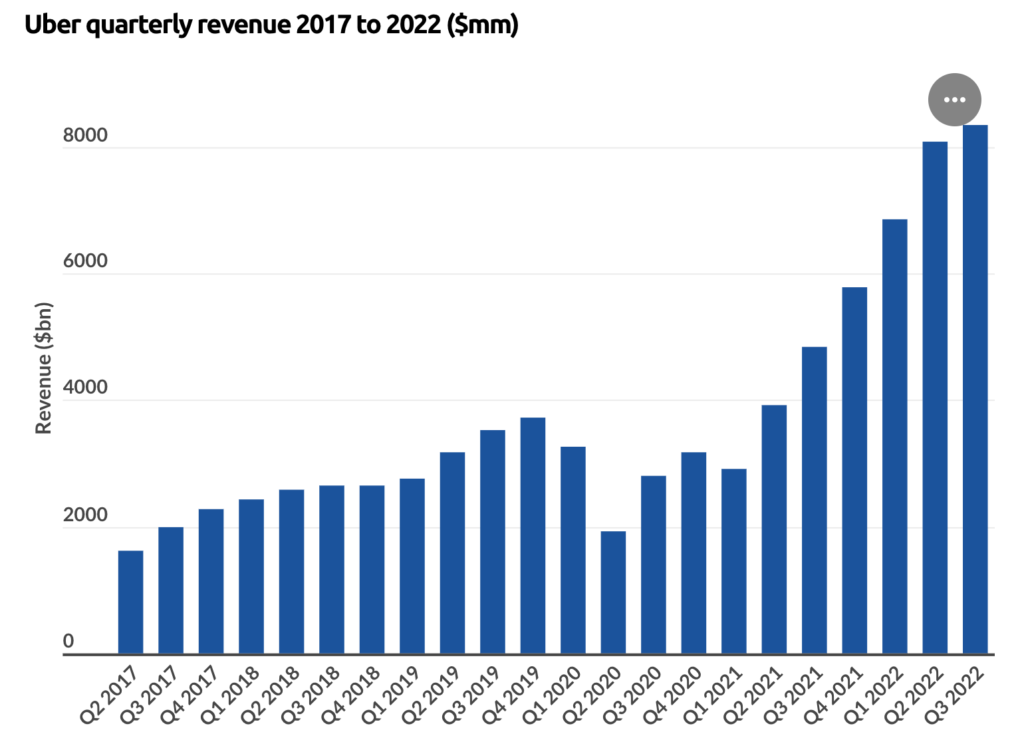
One emerging trend in the ride-sharing industry is the increasing adoption of electric vehicles. According to McKinsey, the number of electric vehicles in ride-sharing fleets is expected to increase from about 100,000 in 2017 to over 1.5 million in 2025.
Trends in the ride sharing mobile app industry

  • Government Regulations and Incentives

Government regulations and incentives can play a crucial role in encouraging the adoption of sustainable transportation options. For example, some governments offer tax incentives or rebates to consumers who purchase electric or hybrid vehicles.

Additionally, governments may impose stricter emission standards for vehicles, which can incentivise companies to shift towards electric and hybrid vehicles that produce fewer emissions.

Safety Features

Safety is a top priority for ride-sharing companies. To ensure the safety of riders and drivers, ride-sharing companies are investing in advanced driver screening, real-time monitoring and feedback, and integration with emergency services.

Another trend is the continued emphasis on safety, both for passengers and drivers. Ride sharing companies are investing in new technologies and protocols to ensure the safety of their users, including real-time background checks, biometric identification, and in-app safety features.

  • Advanced Driver Screening

Advanced driver screening involves thorough background checks, driving history checks, and regular vehicle inspections to ensure that drivers meet the safety standards set by the ride-sharing company.

This process can help identify potential safety risks, such as drivers with a history of reckless driving or criminal offences, and prevent them from becoming ride-share drivers.

  • Real-Time Monitoring and Feedback

Real-time monitoring and feedback can also contribute to ensuring the safety of riders and drivers.

By monitoring factors such as driving speed, route deviation, and sudden braking, ride-sharing companies can identify potential safety risks and provide immediate feedback to drivers to encourage safe driving habits.

  • Integration with Emergency Services

Integration with emergency services is also an important safety feature offered by ride-sharing companies. In the event of an emergency, riders and drivers can quickly access emergency assistance through the ride-sharing app.

This can include features such as the ability to call 911 directly from the app, share real-time location with emergency responders, or contact the ride-sharing company’s safety team for assistance.

Artificial Intelligence and Machine Learning

Artificial intelligence (AI) and machine learning (ML) are increasingly being used in the ride-sharing industry. This includes predictive analytics, dynamic pricing, and smart matching.

  • Predictive Analytics

Predictive analytics involves using historical data and algorithms to predict future rider demand and allocate resources more efficiently.
Trends in the ride sharing mobile app industry

For example, a ride-sharing company may use predictive analytics to determine which areas are likely to have higher demand at certain times of the day and allocate more drivers to those areas accordingly.

This can help to reduce wait times for riders and increase the efficiency of the ride-sharing service.

  • Dynamic Pricing

Dynamic pricing is another application of AI and Machine Learning in the ride-sharing industry.

This involves adjusting prices in real-time based on supply and demand, allowing ride-sharing companies to provide riders with more affordable pricing options during low-demand periods and ensuring drivers are paid fairly during high-demand periods.

By using dynamic pricing, ride-sharing companies can balance supply and demand and create a more efficient marketplace.

  • Smart Matching

Smart matching is a third application of AI and machine learning in the ride-sharing industry. This involves using data and algorithms to match riders with the most appropriate drivers based on factors such as driver experience, vehicle type, and rider preferences.

By using smart matching, ride-sharing companies can provide more personalised and efficient service for riders while ensuring that drivers are matched with riders who are most likely to have a positive experience.

Partnerships and Collaborations

Ride-sharing companies are increasingly partnering with other companies to provide more comprehensive transportation options to their customers. This includes multi-modal transportation options, strategic alliances with businesses, and joint ventures with other ride-sharing companies.

  • Multi-Modal Transportation

Multi-modal transportation options are becoming increasingly popular among ride-sharing companies.

By offering riders the ability to seamlessly switch between different modes of transportation, such as ride-sharing and public transit, ride-sharing companies can provide a more convenient and efficient transportation experience.

This can aid in a big way to promote sustainable transportation and reduce traffic congestion.

  • Strategic Alliances with Businesses

Trends in the ride sharing mobile app industry

Strategic alliances with businesses are another way that ride-sharing companies can expand their offerings and provide additional benefits to their customers. For example, a ride-sharing company may partner with a restaurant chain to offer riders exclusive discounts or promotions on their rides.

This can help to increase customer loyalty and drive additional revenue for both the ride-sharing company and the partner business.

  • Joint Ventures with Other Ride Sharing Companies

Joint ventures with other ride-sharing companies can also be an effective way for ride-sharing companies to increase market share and improve services.

By partnering with other companies in the industry, ride-sharing companies can expand their reach and offer riders a more comprehensive transportation experience.

Joint ventures can also help ride-sharing companies share resources and reduce costs, leading to a more efficient and sustainable business model.

Conclusion: Emerging Trends In The Ride Sharing Mobile App Industry

In conclusion, the ride-sharing industry is expected to continue its growth trajectory, with emerging trends including the adoption of electric vehicles, an emphasis on safety, and a shift towards shared mobility.

Trends in the ride sharing mobile app industry shows rapid evolution as new technologies and features emerge at regular intervals.

Personalised user experiences, electric and hybrid vehicles, safety features, AI and ML, and partnerships and collaborations are just a few of the emerging trends that are shaping the future of this industry.

As ride-sharing companies continue to innovate and improve their services, we can expect to see even more exciting developments in the years to come.


Tuesday, 22 February 2022

Top 6 Blockchain Programming Languages Developers Swear By

 Blockchain is a billion-dollar industry and many firms are looking at new avenues to include it in their portfolio. Blockchain is safe, secure, and a remarkable route to merge with on how we send and receive money. Hence blockchain programming languages has to get its due.

This technology has brought niche development in many industries.

The global blockchain market is expected touch $39.5 billion by 2025, at a CAGR of 65.3% in between 2021-2025.

Blockchain, when combined with other technologies such as cloud computing, is authoritative. Businesses can utilize this to improve their services in terms of security and efficiency.

Here we explore top blockchain programming languages blockchain developers should utilize. This blog will help you decide which would be the best for your project.

1. C++

C++ is a powerful general-purpose programming language (PL). C++ is used to develop (OS) Operating Systems, games, browsers, etc. It supports various types of programming such as functional, procedural, object-oriented, and others.

Blockchain programming languages

C++ finds widespread usage in the tech world, this is true even with Blockchain technology. C++ is popular for blockchain due to capabilities such as move semantics, instinctive control over memory, advanced multi-threading, and object-oriented features like function overloading, runtime polymorphism, etc.

C++ is by far one of the top languages utilized to build blockchain apps. It is easy to manipulate blocks and chains using this code. Therefore C++ is a preferred choice when the need is total control over system resources.

C++ is potent blockchain programming language because of its flexibility and ease of use. It provides a wide range of control over how you want to handle your code, either by giving full access or limited characteristics to suit your needs.

2. Python

Python is used by programmers to develop websites, software, do data analysis, task automation, and finally data visualization. Any developer can utilize Python to create prototypes without long coding. Python reduces development time, hence is a preferable choice to develop blockchain applications and secondly is a robust and versatile language.

Python is popular blockchain programming language as it is an open-source language. A developer can pick from several thousands of resources and plugins while working on a blockchain project. It also offers open-source support and frameworks with libraries like Numba, to speed up code without forfeiting performance or security.

Python is preferred to develop smart contracts and blockchain projects. Python is widely used in crypto exchange development. It can be extended to work with cryptocurrencies as well. Python has been ranked among the top five blockchain development languages last year as per TIOBE and PYPL.

3. Solidity

Solidity is gaining popularity quickly as a blockchain programming language as it is created for writing smart contracts running on Ethereum Virtual Machine (EVM). This new and simple PL is popular among Ethereum developers. Solidity is a contract-oriented Turing-complete PL with an estimated 200,000 developers affiliated to it.

Solidity has the ability to develop dApps, hence many firms choose this PL. It is a high-level PL similar to JavaScript, C++, and Python. It is contract-oriented, which means smart contracts are responsible for storing all the logic used in blockchains, making this a top blockchain coding option.

Smart contracts that run on other blockchains can be easily transferred using a single line of code.

4. Golang

Also called Go, this language is a statically typed, multi-threaded, compiled PL developed internally by Google. It was developed combining the ease of code development and the effectiveness of compiled language. JavaScript and Python developers will find this language complicated, not easy to pick up and difficult to master. But C++ developers should find it easier.

This PL has been used in many blockchain projects such as Hyperledger Fabric and Go-Ethereum. Quick with easy maintenance features makes Go a wonderful choice when distributing your dApp on Ethereum’s network as well.

Go is also popular in NFT marketplace development. Go allows various processes to run simultaneously, which means that it can handle multiple parts of blockchain concurrently and effectively.

It’s easy to build simple, reliable, and efficient software with Go. Go is syntactically similar to C but includes memory safety, garbage collection, structural typing, and CSP-style concurrency. Go is used in Netflix, Uber, SoundCloud, and Dropbox.

5. Java

After its launch in 1995, Java gained a spot among the top 3 PLs with 10 million developers affiliated to it and over 15 billion devices running Java globally. Java is an innovative blockchain PL for smart contracts such as Truffle, ARK.

Java is old fashioned programming, and developers have used it create innumerable applications and games. Java is synchronized, object-oriented, class-based and is designed with implementation dependencies. NEM’s core blockchain network is entirely in Java.

Java finds prevalence in the tech industry and is preferred in web systems as developers are free to manage app logic and can dodge focus on integration. Programmers are offered the flexibility to write code that can be run on other systems as well.

Java’s excellent code portability is why many blockchain companies use it to develop their apps.

6. C#

C# was developed to be a Microsoft language, but soon found many uses, one of them being blockchain development. C# is an Object-oriented programming language that allows you to build programs that can work across multiple OSs. Stratis and NEO projects use C#.

This PL has lots of features for enterprise-powered apps, cloud, and cross-platform development. C# is filled with features of C, SQL, and .NET frameworks, hence favored for Blockchain development. C# is open source, syntax easy to fathom due to similarity with C++.

Blockchain developers can write portable code across devices.

This PL is considered to build dApps, Smart Contracts, and infrastructure in a Blockchain environment.

Blockchain programming language

Conclusion - Top Blockchain Programming Languages

In 2021 the tech world was concerned with the best blockchain development languages ruling over cryptocurrencies and smart contracts.

Several PL develop blockchain-based products. But there is no clear winner and depending on the situation the winner varies. As each have their advantage depending on your project.

So pick the PL that suits you project the best considering: resources, budget, time, features, and the rest.

blockchain programming languages


Trukker Business Model And Its Recent Funding

 Trukker is the largest tech-established truck aggregator across GCC, Jordan, and Egypt by volume – transactions, revenue, geographic scale and size of their fleet. They secured 170+ clients in 18 months of commencing their B2B business across UAE and Saudi Arabia.

Trukker business model use in Mena region

Trukker business model aims to improve the lives of drivers using technology, data analytics, and welfare structure. While for cargo owners and transporters, a seamless experience and to help them focus on the core business.

TruKKer’s technology integrates logistics planning, dispatching, fulfilment and reporting.

Trukker Business Model: Uber For Trucks

 Trukker business model aims to be known as the Uber for trucks in their region of operation and are working to be the primary freight exchange entity where they operate.

Their operations are similar to Uber and Careem. They pride the moniker ‘Uber of trucks’, even though moving cargo and moving people have no operational similarity.

The fundamentals of using technology and real-time data to connect demand and supply in an efficient manner is similar to what Uber’s cab aggregation does.

Uber has also ventured into trucking in North America which is a validation of Trukker’s business model. But in this line of business last mile delivery is vital.

Trukker The Uber For Trucks

TruKKer’s last mile delivery is growing at a phenomenal rate in the UAE making 500 plus deliveries per day across UAE, which they expect to double shortly.

TruKKer business model focuses on the delivery of only large and heavy products that demands a truck. This disengages them from competing with various last mile parcel delivery companies.

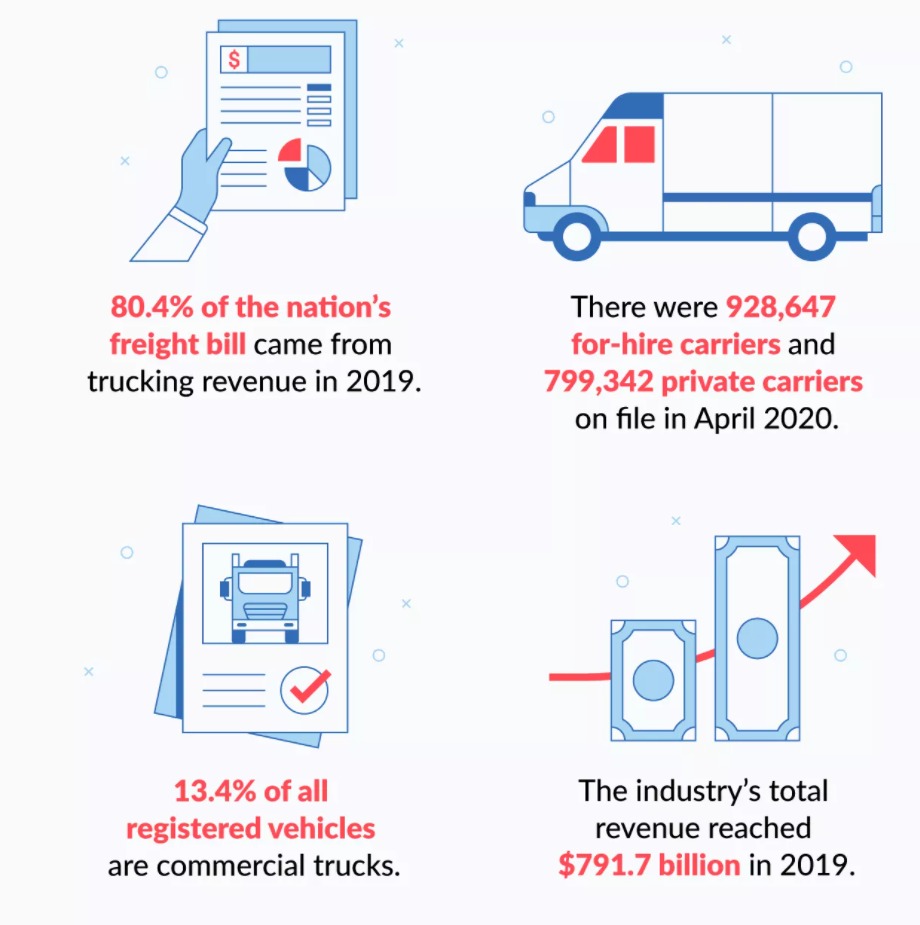
Trucking stats

Trukker guarantees availability of trucks and offers total track and trace compliance on the entire fleet. They offer clients the most advanced customer interface in the industry. Clients can request a truck, discover the most competitive price and monitor their shipments.

TruKKer provides real-time status updates to the client’s dashboard without human intervention.

Cargo owners now have access to a transparent and organized interface in this huge, opaque and unorganized trucking industry. And various tech-based processes and tools helps ease multiple operational and other risks.

Trukker business model adoption

TruKKer is collating data to provide advantages to the freight ecosystem in terms of access to financial products, cargo safety, environmental profits, and multiparty integrations.

TruKKer Funding News

Incepted in 2016, Trukker raised $23 million last year in one of its largest Series A funding rounds in the GCC region. The financing was led by Saudi technology venture capital fund (STV) that previously invested in Careem.

Trukker also recently signed a $10 million deal with Silicon Valley established –Partners for Growth. They would provide venture debt to finance its receivables.

Trukker operates a marketplace and connects independent truckers with merchants who seek shipping. A Chinese firm – Full Truck Alliance, operating a similar business model, was valued at about $12bn in a funding round.

Trucking details images

Transporter Potentials

TruKKer’s business model benefits transporters on two grounds. Firstly with a great job of driving and maintaining trucks as per industry standards and secondly to comply with technology tools.

TruKKer will do everything else like marketing the services, finding cargo with minimum downtime, ensure fair and timely remuneration and manage client reporting and interfaces.

Their business model is based on the tech aggregator leveraging technology and the ability to manage finances to improve asset utilization. So that cargo owners get reliable supply at reasonable prices. While transporters and drivers have continuous business and regular recompense.

Software and Technology

TruKKer will soon offer its technology to third-party transporters to help manage their own fleet and merge with TruKKer. This will help to access loads when their assets are idle. This kind of fleet management offers jobs when fleets are idle.

Having a proprietary system of hardware, software, and algorithms allows them access to member trucks in real time. And the ability to identify idle fleet, offer loads, create a marketplace for price discovery, track shipment, track delivery, and fulfilment of promises.

They have achieved total digitization of documentation in long haul trucking. They are pushing for digital copies instead of processing tons of paper.

Logistics is a traditional domain that has begun using technology-based advancements. Soon technology will replace demand planning, stock protection, segmentation, dispatching, delivery scheduling, route planning, completion, and reporting.

Technology tools currently complement these functions but advances in software, hardware, and information processing technologies could substitute the human interface. But humans will have the role to watch over critical tasks and troubleshoot in case of anomalies and exceptions.

Expansion and Future Challenges

Soon Trukker plans on strengthening their foundations on their home turfs (UAE and KSA) and resolutely expand across the MENA region. After having begun operations across three GCC countries, they began operations in Egypt, as Egypt is gateway to Africa. Now opportunities in Iraq and Syria beckons.

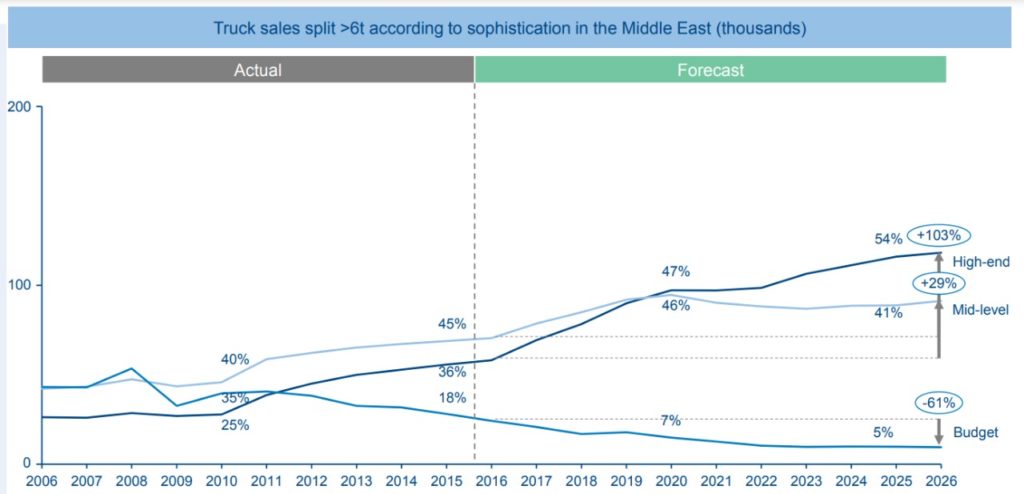
Middle east trucking info

Ability to finance is usually the only succor some players bring to the table, which is not ideal and creates disintegration. Many brokers are restricted by their working capital and not by their operational credibility. This has made end customers use credit periods without realizing how they increase transaction costs. This is because capital cost is steep for small brokers and freight forwarders.

There are plenty of challenges in the logistics and road freight industry and many players who don’t add any significant value. Financing transactions is a key challenge. Customers take credit from brokers and brokers take credit from suppliers. Suppliers pass this credit lower down the chain.

Documentation is yet another challenge. A shipment typically requires 5 hard copy documents from various stakeholders. TruKKer is aggressively working towards digitization and exploring technologies such as block-chain to process information between various stakeholders and regulators to make it seamless and secure.

Trukker is investing in technology to certify trucking and the logistics industry are not victims of traditional lag in technology adaptation.

Trukking business model

Towing Apps Like Uber Has Motorists Covered


A car break-down is any motorist worst nightmare.

Now he requires help to get it either fixed or towed to a repair facility. But how does anybody go about contacting a towing service provider? The stranded motorist can search for towing/roadside assistance services. But getting a number to reach the service without too many details is a difficult scenario and he is fishing in the dark.

But instead the motorist can reach for his smartphone and search for a “Towing Apps Like Uber or Roadside Assistance App”. The app would provide all necessary information and the motorist has the option to choose exactly what he needs. He can provide his location and find out how much it would cost for the service. Once he confirms the service requirement, the estimated time for the tow truck to reach is provided and details of the service provider.

Mobile technology and the rise of on demand app solution has alleviated a difficult situation. Tow trucks or roadside assistance is available anytime and anywhere on-demand for customers.

What is Uber for Tow Trucks? How it helps to increase profits?

Uber for tow trucks app is a platform that ensures tow truck owners or companies offering towing services get an opportunity to display their services and secure business. Customers can download the app and use it effectively to engage with towing services.

The app would display time required to reach them and the costing.

The Uber for tow trucks offer intuitive modules that provide the best support for customers and aids your business process. Uber for tow trucks equips businesses to expand along with functionalities that support it along with cloud assist for business processes.

Top Towing Apps Like Uber & Uber for tow trucks around the world

  1. Urgently (US)Towing Apps Like Uber

    Urgent.ly is an US based towing service provider of on-demand tow truck and roadside assistance via an app. Customers can connect with clients needing roadside assistance with their tow trucks and roadside assistance providers. Customers can pay for the service directly using the app.

  2. Honk (US)

    Towing Apps Like Uber Honk For HelpHonk is yet another roadside assistance / tow truck app that is pretty popular in multiple US cities. The app has an exhaustive list of roadside assistance services such as flatbed towing, specialized car towing, tire change, dead battery start, lockout, replenishing fuel and other emergency scenarios.

  3. StrandD (India)

    StrandD - On-Demand Roadside AssistanceThis startup operating in India offers services 24/7 on-demand towing services / roadside assistance. Strand-D has exhaustive coverage in over 1500 town and cities. It has an expansive list of more than 16,000 certified roadside assistance service providers and towing professionals affiliated with them. Membership is not a necessity, you just have to pay as per usage.

  4. Morni (Saudi Arabia)

    Morni Provider - Apps on Google Play

    Morni is pretty popular roadside assistance service that operates in Saudi Arabia and few Gulf countries providing roadside assistance services to the customers anytime, anywhere. This app covers basic breakdown needs such as flat tire replacement/repair, towing services, fuel delivery, and battery trouble. All you got to do in register you request on the App and a service provider will be dispatched in quick time and do the needful.

Features Of The Uber For Roadside Assistance App

Real-Time Tracking With GPS

  • Track the agent or vehicle journey in real-time with unified GPS to check the status
  • User can view the agent arriving to the location or even while the vehicle is being towed away
  • Truck drivers can use the GPS to check out the best navigation to the client location

Define Zones

  • Admin can check various zones available and using a dashboard disable service in specific regions
  • Admin can set a pricing strategy with a base fare for zones and categorize them
  • A service radius can be set using geo-fencing wherein a particular agent can provide their services

Call Screening

  • Uber for tow trucks app provides secure calling feature between clients and drivers
  • Clients can call the driver directly with the call masking kicking in and ensuring the privacy of their contact details
  • Or if comfortable the client can chat with the in-app provision to discuss and resolve queries

Analyze Earnings

  • Uber for tow trucks ensures admins view earning details. They can also export the same for offline use.
  • The agent/business can analyze the earning details in the app on daily, weekly, and monthly intervals
  • Joint owners of businesses can check out earnings at regular intervals

Manage Fleets

  • Admin can manage all the vehicles that are registered with them and view details of all individuals
  • Admin can define different types of tow trucks and categorize them
  • Admin can store driver details and vehicle maintenance information for customers to assign rating

Cloud Support

  • The Uber for roadside assistance is cross-platform software that provides amazing user experience
  • Data can be stored and shared across all modules and devices in a smooth and synchronized manner
  • Therefore it enables users to access their account and request services from any of them with cloud support

White Label Provision

  • Our white-label tow trucks software solution can be personalized as per your need
  • Edit the app theme, design, color combination, assign a name or logo and market it as your product
  • System admin has rights to enable or disable certain features as per their liking

Track Booking

  • Admin can track bookings and view its real-time status
  • Any updates by the service provider generates notifications for the user as well as updates the service status
  • Admin can track the entire visit of a towing agent and check service status in real-time until its completion


Working of Uber for tow trucks/roadside assistance app


  1. Registration

    (one-time or optional)
    Customer can register on the app using an email address or phone number or via social login

  2. Service selection

    Customer can opt for the service he needs from a list of options provided such as towing, battery replacement, tire repair, accident damage, etc.

  3. Share location

    Customer can share his location with the towing service provider.

  4. Share vehicle info

    Customer also provides vehicle information such as make, model and registration number. This is for the service provider to gear himself up for the job.

  5. Service fulfilment

    After the towing service provider reaches the client’s vehicle, the vehicle is either repaired or then towed to a service centre.

Features in Towing App Like Uber/roadside assistance software

An on-demand tow truck/roadside assistance service business consists of three key stakeholders.

  1. The customer– Needs assistance
  2. The service provider/tow truck driver– Provides assistance
  3. The business admin / towing company owner– Manages the show

Let us check out basic features of each of modules.

Tow truck/roadside assistance app features

  1. Easy Onboarding

    Simple registration gets you started with the app – email, phone number or social login.

  2. Service list

    Customers are provided with a list of service options available such as towing service, battery repair, tire replacement, etc. The service options would depend on each service provider and their offerings.

  3. Location sharing

    Customers would have to share their vehicle’s location so that the service provider can find your vehicle.

  4. Add vehicles

    Customers can add include all vehicles owned by them in their profile. This information would help the service provider to arrive at the location armed with necessary tools.

  5. Cost information

    Customers are provided with the details about the service charges based on the work involved.

  6. Real-time notifications

    Customers get notifications and regular updates via push and SMS channels about the service status.

  7. Seamless payments

    Customers can pay without any hassle for the services rendered to them. Multiple payment modes are available such as cash, card, and wallets.

  8. Reviews & ratings

    Reviews and ratings ensures that users are able to share their experience and provide necessary feedback to improve the service as well as encourage other clients to use the service. Feedback mechanism helps to enhance the quality of the service.

  9. SOS panic button

    A panic button is placed on the tow truck app in a prominent location. Customers can use it in case of any emergency. An SOS signal will be transmitted to concerned authorities.

Tow truck driver/service provider app features

  1. Easy login

    As in the customer app, tow truck driver app also needs registration and and sign-in.

  2. Real-time requests

    Towing requests are relayed to service providers in real-time via the app. The provider can either accept or reject a call within a given timeframe.

  3. Availability status

    The app has an ‘Availability Toggle’ whereby the service provider can decide to either be present online to receive service requests.

  4. Job details

    Drivers receive the vehicle location, contact details and other relevant information after accepting a request.

  5. Built-in navigation

    There is in-app Google Maps provided for service providers to use and reach the customer location quickly.

  6. Collect payments

    After the job is completed, an invoice is raised that is visible on the service providers app screen that is titled as “collect payment”. The client can pay online or using other means as provided in the app.

  7. Driver/service provider dashboard

    An overview of both completed services, upcoming requests, feedback information, earnings information and more.

Uber for tow trucks admin panel

  1. Secure login

    2-factor authentication so as to login securely into the admin dashboard.

  2. Dashboard

    A bird’s eye view of the towing business operations with key metrics, analytics and highlights.

  3. Tow trucks/fleet management

    Admin can add, manage and track their entire fleet of tow trucks on a real-time map.

  4. Driver/service provider management

    Add and manage towing / service professionals who are part of the network. Keep an eye on their schedules, payments, feedback and more.

  5. Customer management

    Provide customers with all necessary information such as number of service providers, details of work that can be done, request status, feedback mechanism, payments received and more.

  6. Promotions management

    Towing businesses have the option to send promo codes and coupons through SMS, push notifications and email to towing service app users.

  7. Rate and pricing management

    Rates for services offered by a towing business to be available on the app. Manage pricing strategy based on service type, pickup, costing as per distance, time taken, and other options.

  8. Reporting & analytics

    Towing businesses can collate useful business insights based on the app usage patterns and improve roadside assistance services being offered.

Towing App Like Uber

Top Golang Web Framework For Development in 2022


Golang or also known as Go is an open-source compiled programming language that helps build simple, systematic, and secure software.

Google designed this almost 15 years back. This has been readily adopted by developers’ world over due to its similarity to C-language with features such as memory safety, structural typing, and garbage collection.

Golang is a statically typed programming language. It was developed with the aim to enhance efficiency in programming. It is open-source and lightweight.

Golang web frameworks are used by developers to write application programming interfaces (APIs) and web services without much ado. Frameworks are not a necessity while building small applications. But they are needed in production-level software. This is because of the huge time consumed while coding a debugging-level production even with necessary knowledge or knowing its features.

Frameworks provide additional functionalities and services that other developers can use to add similar functionalities in their software by skipping to write the full-fledged software themselves.

Go language aims to be modern, with support for networked and multicore computing. It also takes effort to combine the ease of programming of an interpreted, dynamically typed language with efficiency and safety of a statically typed, compiled language.

  • Go reduces the physical effort put in by developers. Developers have succeeded in reducing clutter and complexity in its design.
  • Forward declarations and header files have been eliminated and everything is declared ones.
  • Stuttering is cut down via a simple derivation.
  • There is no type hierarchy as they don’t have to announce any relationships.

The top web frameworks in Golang on the basis of popularity are listed as follows:

Pros of Golang Web Frameworks:

  • Static:It has a primitive type and structures helps programmers to detect bugs easily. It also has in-built lists and maps that can be used while integrating in the web app.
  • Interface: Interface Types need to be satisfied with the method, where structure has an important role. This makes the code independent. Interfaces help in churning scalable and modular code.

Golang web frameworks

Cons of Golang Web Frameworks:

  • Non-attentive Community: There is no community support with any kind of suggestion nor respond or offer.
  • Generics: Golang lacks Generics. Those familiar with Java find it huge. The code cannot be reused which eats away valuable time. Therefore function written for one type isn’t reusable for another type of collection.

Golang Web Frameworks For Web App Development

1.  gin

The gin framework tops the list in terms of acceptance due to its simple framework and performance. It is frequently used to build a REST API for the backend. If and when a programmer wants to develop a single page application using a frontend framework. This framework makes use of the HTTP routers for handling traffic and is ideal for beginners.

Go supports essential libraries and features therefore it is suitable to develop high-performance REST APIs.

The API of this web framework is similar to that of martini but is almost 40 times faster. Working with gin is easy and reliable due to huge community of users who have created well-tested middleware.

But the biggest flaw it has is that it is not suitable for smaller applications. Therefore you cannot depend on gin to develop large backend applications or enterprise-level server complex functions.

2. beego

Beego is a rapid web app development framework useful for quick development of REST APIs, web applications, and backend services in Golang. It is pretty similar to the Django web framework in Python. But it also contains definite features of Golang such as interfaces, struct embedding and does not involve any third-party installations. It has an inbuilt called Bee Tool to locate code changes and is a mature Model-View-Controller (MVC) framework with its own libraries.

It contains eight modules that you can use or ignore as per the requirement of your project. It incorporates Object-Relationship Map (ORM) to organize the application’s database along with session handling tools and logging systems. It also combines a cache handler and libraries for operating HTTP elements. Another feature worth mentioning here is it’s similar way to how Django works in using command-line tools.

One drawback why beego is not suitable for beginners is due to its high functionality and extensive features.

3.  echo 

Echo is a good performing, uncluttered and extensible web framework in Golang. It has a highly efficient HTTP router that smartly prioritizes routes with zero dynamic memory allocation. It helps build robust and scalable REST APIs that is easily organized into groups. It installs TLS certificates automatically from Let’s Encrypt and improves speed by providing HTTP/2 support to enhance user experience. It has many useable inbuilt middlewares. Developers can define their own to set at a root, group, or route level.

Echo supports data binding for HTTP request payload, including XML, JSON, or form-data. It contains an API to send a various HTTP responses, including JSON, XML, HTML, file, and attachment. Templates can be rendered using any template engine and have modified central HTTP error handling.

As every framework has its downside so does Echo, it is maintained by a single developer and code updates is haphazard.

4. kit

Kit framework helps building tough, dependable, and sustainable microservices in Golang. It combines a set of packages and best practices to provide an inclusive, robust, and dependable way of building microservices for all kinds of organizations. Go is an all-encompassing language, but microservices demands specialized support.

The kit framework provides Remote Procedure Call (RPC) safety, transparency, and infrastructure assimilation. It is a combination of several co-related packages, forming a responsive framework for constructing large Service-Oriented Architectures (SOAs).

This makes Golang an able language for writing microservices. It is designed for effective collaboration thereby developers can choose databases, components, platform, and architecture that suits them best.

The issue with Kit framework is due to substantial use of interfaces the overhead of adding API to the service is high.

5. fasthttp

Due to limits of Net/http in optimization opportunities fasthttp framework was introduced as it provides fast HTTP server and client API. It is optimized for speed and can handle 100K qps or more. It can also handle 1M concurrent live connections with the latest hardware. It can handle low memory usage and inititates easy connection upgrade support.

Fasthttp API is designed to prolong existing client and server executions. Or to write custom client and server implementations from inception. A gamut of information is presented to the request handler, such as unique request-id, server / client address, per-request logger, etc.

Net/http is reliable and tested as it has a wider audience.

As far as con for fasthttp goes, both net/http and fasthttp are discordant, whereby developers find it difficult to migrate from net/http to fasthttp.

Conclusion – Golang Web Frameworks

The above-given framework is some of the most used Golang web frameworks at present compiled on the basis of popularity. Each framework has its own set of features to play around with before implementing any particular framework.

But before you begin, make sure that you clearly understand necessary requirements. Last but not the least, Golang also has other frameworks in their repertoire such as Revel, Buffalo, Martini, Goji, etc.

Golang web frameworks


How The Best Towing Software Work?


Ever been in a situation where you found yourself stuck in the middle of nowhere with no repair center, gas station or mechanic in sight?

Getting confined without any help in the vicinity can be both frustrating and anxiety ridden.

Furthermore, calling a friend or family member at an odd hour to help would be far-fetched.

Finding an online roadside assistance or getting the services of on-demand towing service app at this juncture is like having a knight in shining armor at your rescue. AAA Roadside assistance or a towing vehicle app can get your vehicle towed to the nearest repair outlet without too much stress.

Uber for Tow Trucks

Towing software solutions (such as apps for towing services) have been available in the market for some time now. However, as the number of vehicles keep growing, the need and demand for towing services rise exponentially.

In this blog we provide you necessary information on vehicle towing apps, their working model, key features and all that you should know about them.

Towing Management Software

Towing software aids the automotive towing and recovery businesses to manage their operations and help customers who are in need of assistance. This could include features such as truck dispatch, customer database, payment processing, GPS for tracking, and accounting.

HONK Mobile Roadside Assistance App

These software can also be used to locate and communicate with garages. Or towed vehicles can be delivered to the customer after due repairs at manufacturer authorized dealers or auto repair shops.

Towing business personnel and tow truck operators utilize these software to receive emergency calls, attend to clients, manage back office tasks and sometimes integrate with accounting or fleet management software.

To qualify for inclusion in the Towing category, ideally the product must have features such as: GPS tracking, tow/lift vehicles, types of services, history of repairs, and all customer requests.

On-Demand Towing Software

Apps are being introduced in most domains as having digital presence has become an important facet for every business. New apps are launched in the market every day to make life easy for consumers.

Folks value their time and hence several apps have come up to ensure clients could save time, one such being road assistance services. Road assistance software / Towing software solutions are so much the need of the hour.

Urgently Towing Solutions App

Towing software solutions is a consolidation of various road services that companies offer to their users. Towing software or roadside assistance offers either to tow away the vehicle or on-the-spot services/repairs that ascertains a vehicle becomes road-worthy.

Future Of The Towing Industry / Uber For Tow Trucks

Towing services are handy when you are stuck in a place with no immediate help like repair stations or gas stations nearby. Over and above, in some regions due to poor net connectivity searching for road assistance services will not be feasible. And one cannot rely on information provided on the internet in such dire situations.

Towing Software Solutions

It is here where the services of a towing app or roadside assistance app becomes crucial. It gives you the option to engage the services of a towing firm to either get your vehicle towed or get the vehicle ready to be driven.

Towing software market is expected to grow at a rate of 4% during 2022 to 2027. Additionally the market is anticipated to reach a market value of about $30 billion by 2027. These statistics indicate the rapid growth of the towing vehicle market.

In 2012 the revenue generated by this sector was $4 billion. By 2024 the revenue in this domain is expected double and reach $8 Billion.

Market statistics clearly depicts the value of the automobile towing industry. Therefore investing in towing vehicle solutions is an excellent move for entrepreneurs. Some of the popular towing service apps include- Uber for tow trucks, Urgently and HONK roadside assistance app.

How Do The Best Towing Dispatch Software work?

Let us understand how Uber for tow trucks operates:

·        Registration

After installing the app, the user has to register on the app. Simple registration by the customer is followed by choosing the type of roadside assistance service. Registration process can also be fulfilled using an email address or mobile number or even via social media account.

·        Service Selection

After the user has registered on the app, you have the option of selecting a necessary service. There is a wide variety of choice here depending on the requirement of the user, such as vehicle towing, tire replacement, fuel requirement, etc.

·        Location Sharing

The user has to share the location with the app so that the service provider can come over to help them. This can be done in app or also location sharing can be done manually. Manual location facility is provided in case the customer has already left the location.

·        Vehicle Information

Additionally users would also have to share information about their vehicle. The information that would be required is: type of vehicle, model, registration, fuel type, etc. This information is imperative because the service personnel would have to ensure necessary spares are available with them.

Depending on the type of the service you choose the towing agents or the service agents would come prepared fulfil their services. Providing all necessary information will entail a smooth and quick service during emergency situations.

Tow Truck Management Software

Let’s look at important features of a towing service app / towing vehicle solutions software.

A towing app or a roadside assistance app has three modules as listed below:

  • Customer Module

  • Service provider Module

  • Admin Panel

These are critical features for an on-demand towing vehicle solutions software. It is imperative to incorporate all the features listed below in an app.

Customer Module Features

  • Quick and trouble free onboarding procedure
  • Details of service options
  • In-app / manual location sharing
  • Real-time notifications
  • In-App calling and messaging
  • Multi language support
  • Service cost info
  • Discount coupons / codes
  • Real-time tracking
  • Reviews and Feedback
  • Multiple payment facility
  • Vehicle Information
  • SOS button or Panic Mode in case of emergency

Service Provider Module Features

  • Simple & Easy Registration / Login
  • Trouble free Authorization
  • Complete Job Profile
  • Real-time Requests
  • Built-in Navigation System
  • Driver Dashboard
  • In-app Payment Collection
  • Option to accept / reject a request
  • In-App Calling and Messaging

Towing Software Admin Panel Features

  • Dashboard Analytics
  • Customer Management
  • Tow truck / Service Provider Management
  • Reviews and Ratings
  • Reporting and Analytics
  • Marketing / Promotions Management
  • CRM Integration
  • Fleet Management
  • Zone wise Pricing Management

Monetizing From Tow And Roadside Assistance App

There are several ways that can be adopted by which we can generate revenue from towing vehicle service apps or roadside assistance apps.

  1. Subscription Plans
  2. Third Party Ads
  3. Featured Listings
  4. Charging Fee
  5. Commissions

Some of the services that can be included in the Uber for Tow Trucks app could be:

  • Delivery of gas to the client’s location
  • Starting a vehicle when battery is weak
  • Performing tire change service
  • Transporting an immobile vehicle
  • Towing a vehicle that won’t start

On-Demand Towing Mobile Application / Tow Truck Management Software

To develop a robust system requires a team of experts and a proven tech stack. The team should ideally consist of:

  • Project Managers
  • Front-end & Back-end Developers
  • UI/UX Designers
  • Android and iOS Developers
  • Testers & Quality Assurance Team
  • PR Team

Business Models for Towing/Road Assistance App

There are basically two main types of business models that one can consider while developing a towing software / on-demand towing solutions. Both of these business models can effectively help you resolve the customer issues and streamline your business operations.

·        Single Service Model

In this model any individual or a firm that is in the business of roadside assistance or Uber for tow trucks operates as a single entity. The individual or the firm is confident that they possess a large customer base and can operate profitably.

·        Aggregator Model

An aggregator collects data pertaining to services offered by several competing individuals or firms and displays it on its own website or application software. In this model an app connects users with tow/roadside assistance providers. Users pay the service providers through the app. Urgent.ly operates in this manner.

Uber for tow trucks